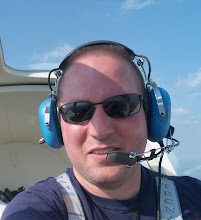
Plans for Halloween included a flight up to Middletown Delaware's Summit Airport, EVY, and back again. I was flying the Sierra and the weather looked pretty good for the flight based upon my briefing. I got into the air and headed north toward Summit. There were a few bumps along the way but I expected that from the Sierra due to its light wing loading. As I got closer to Summit I began to call out my location over their UNICOM. Another aircraft was calling and concerned that I was en route to land because it appeared to be in a position and hold on the active runway. This is very unusual for a non-towered airport and probably why he was calling me. As I got closer to the airport the other plane cleared the runway and departed. I was faced with another problem. As I descended to pattern altitude the air became much rougher. The bumps required roll, pitch and yaw inputs to try and hold the aircraft steady. I'm not sure if it was a wind shear or just some gusts. Whatever it was it was going to make a stabilized approach a real problem. As I was fighting with the controls to maintain some semblance of straight and level, the engine momentarily started to lose power. The RPM's dropped off and I thought I was about to experience an engine failure. I was pretty confident of my ability to make a forced landing without an engine if I had to but doing it in this turbulence would scare me. Even before I turned on the Aux. Fuel Pump the engine RPM's had come back up again. Nothing but a momentary hiccup. Now it became time to decide about trying to land. I knew that I had enough fuel on board to head somewhere else. I really didn't need to land at Summit and I didn't want to try and land a light airplane at an airport I had visited only once in a Cessna. I climbed out of the pattern and headed southwest toward Ridgely and more familiar territory.
Once I got closed to Ridgely the air seemed to smooth out for me. There was a crosswind at the airport to test my skills but the landing went well. After a short rest at the airport it was time to head back to Bay Bridge. The approach and landing were slightly more tricky due to the bumpy crosswinds. In the end I saw firsthand how a lighter plane such as the Sierra flies in relation to an aircraft that it almost twice as heavy. The winds can really push you around when you're small.
Friday, October 31, 2008

Sunday, October 19, 2008
That was exciting...yikes!
The flight school where I earned my certificate and had done most of my flying had suffered along with most of aviation. Just recently, they were unable to continue doing business and have closed their doors, for good. This has left a large void in what was one of a few businesses at Tipton Airport. Unwilling to give up flying the ubiquitous Cessna Skyhawk, I made arrangements with another flight school/rental company to fly their one 172SP. Aircraft rentals are not like cars. Just showing up at the school with your pilot certificate is not enough for them to hand you the keys. Before they will do that you need a "checkout ride." Every school has a different procedure for this but it almost always involves going out with one of their flight instructors and demonstrating that you know what you're doing.
I got sent out with one of the schools CFI's for my ride. It's very difficult to get in an airplane and fly with someone you've just met five minutes ago. In addition, there is more than one way to fly an airplane. More on that later. When all was said and done, and I got my signoff, I noticed that the CFI showed a certificate expiration of 8/2010. I make it a habit of checking the FAA database for the people I have instruction with. I noticed that the listing for my CFI did not show his instructor certificate in the FAA database. I did show that he was a commercial, instrument rated pilot with mutli and single engine land ratings. He was not doubt experienced and a much better pilot than I. But he had only been a CFI for two months. Is this bad? No, its not bad, but think about being a brand new, insert job here. It's difficult until you've done it for awhile.
Then there is me, an almost 100 hour pilot who has NEVER flown with this guy before. Talk about awkward. The next time I have a checkout flight, or any flight where another pilot sits in front of a set of controls, I will ask a simple question that will solve many problems. Who is the Pilot in Command? Pilot in Command. It's not just a cool sounding name. It's the person who is directly responsible for the safety of the flight. It's the person who takes the blame when something goes wrong. There can only be one PIC. During flight training and before someone has their pilot certificate, the CFI is the PIC even if they never touch any of the controls during the flight. Some may even argue that the CFI is PIC when the student is solo because they ultimately endorse the flight. When you are a student flying solo you make log entries as solo and PIC. The only time you can carry a passenger as a student and log the flight as PIC is during your checkride. When you are a certificated pilot you can receive dual instruction but still be PIC, or you could just receive dual instruction and let the CFI be PIC.
When I did my checkouts in the Tecnam Sierra, I logged my time as dual only and let the CFI be PIC.
I digress.
The checkout flight was to consist if some weight and balance calculations, landings, a stall, and a simulated forced landing. The wind at Bay Bridge was fluky so we decided to fly over to Easton and back. This also let the CFI know that I knew how to use the radio and the GPS.
Off we flew to Easton. The guy must have made my nervous, I even told him so. I set up for what I thought was a very good landing at Easton. Then at the last moment I bounced on the flare. I tried to arrest it but I bounced a second time. I was porpoising. I never let my landings get past a second bounce because a porpoise just gets worse and you will most likely end up with a collapsed nose gear if you continue. There is a very simple fix, however. It's called going around. You add full power and leave for a "do-over." It's a required and perfectly normal maneuver to perform and solves all manner of landing problems. As we continued up into the traffic pattern I could tell that the CFI was a bit confused. He asked if I had performed a go-around. I think he thought that I was doing a touch-and-go. I assured him that it was a go-around, it would have been a lame touch-and-go. He asked why I had done it and I explained about the bouncing and porpoising. He explained how I could have corrected for the porpoise. What he said was indeed correct and I could have attempted it. Perhaps someone with more than 100 hours time or more skill than I could have salvaged the landing. It also could have gone badly and ended up with a collapsed nose wheel, bent firewall, and broken prop. But either outcome deserves the same question. Who is the PIC? It it was me, and judging by the fact that I was flying the plane I had every reason to believe it was, then I was responsible for the outcome of the flight even thought someone else, an instructor, could say, "C'mon, you can make it."
As we got back into the pattern and requested the option, more comments and questions from the CFI. Once again, a clear understanding of who was PIC would have cleared it up. I was told that using full flaps on my last landing may have contributed to the bounce because the winds had been a little fluky. I told him that I agreed with that but I had only used 20 degrees of flaps and not full for that very reason. As we got onto the downwind leg he must have been paying more attention to my flap settings because now he wanted to know why I had extended 10 degrees of flaps on the downwind. I explained to him that I was taught that way, downwind with 10 degrees flaps and RPM's at the bottom of the green arc. This allowed me to stablilize in the downwind. "Yes, but you're above the 'white arc'." Aircraft airspeed indicators are marked with a white arc that signifies the normal flaps operating range. The top of the white arc indicates Vfe, the maximum flap extension speed. In the case of the Skyhawk SP it was 85 knots. We were indeed above 85 knots with flaps extended 10 degrees. Was this a test? Was he unfamiliar with the Skyhawk SP? He has most likely flown several different types and models of aircraft. Having done most of my time in Skyhawk SP's I might have been more familiar with them than he. It is documented in the POH and placarded on the flap handle that Vfe for 10 degrees flaps is 110 knots. Any more flaps and you have to be at or below 85 knots. I explained this to him and the problem was solved. He knew that I was aware of the proper speeds, and that I was taught to and deliberately flying the aircraft in that manner. The second touch and go at Easton went a whole lot better. We climbed up and out and then did a power off stall with no problems. Next came the simulated engine-out forced landing. Once again there was little in the way of problems. I hadn't really performed one of those since my checkride. The one on my checkride wasn't so good.
We headed back to Bay Bridge and I set up for my first approach to the airport in a Skyhawk. The wacky pattern, I've written about it previously, wasn't actually so bad in the Cessna. There was still a crosswind but it seemed to require very little correction. I didn't use any more than 20 degrees flaps however. A good smooth touchdown and then the roll out. The distance from the threshold of runway 29 and the turnoff to the left is 1700 ft. During the roll out I started to apply the brakes to make the turnoff. The braking was relatively hard and I momentarily felt the brakes lock. I immediately let off on the brakes to stop skidding. I reapplied the brakes near the turnoff and heard a popping noise and some hissing. I didn't immediately connect the event with the left main tire blowing out. But that's exactly what happened the left main tire blew out and we hadn't exited the runway yet. The CFI called for the controls and he tried to get us off onto the taxi way. We were unsuccessful. I radioed to the other aircraft in the pattern that we had effectively closed the runway. I also made sure that their fuel status was ok as we worked on how to get a ton of aircraft moved. We eventually called for help. A combination of pulling while lifting the left wing strut was what worked. It took awhile. We then got a dolly for the left wheel and a hitch for the nosewheel that hooked up to a truck. the airplane was towed back to the ramp and the runway was reopened. In the end I got signed off to fly their Cessna. I also had a wonderful learning experience that I can carry with me. In the end the only thing that appeared to be damaged other than a tire was pride and ego.
I got sent out with one of the schools CFI's for my ride. It's very difficult to get in an airplane and fly with someone you've just met five minutes ago. In addition, there is more than one way to fly an airplane. More on that later. When all was said and done, and I got my signoff, I noticed that the CFI showed a certificate expiration of 8/2010. I make it a habit of checking the FAA database for the people I have instruction with. I noticed that the listing for my CFI did not show his instructor certificate in the FAA database. I did show that he was a commercial, instrument rated pilot with mutli and single engine land ratings. He was not doubt experienced and a much better pilot than I. But he had only been a CFI for two months. Is this bad? No, its not bad, but think about being a brand new, insert job here. It's difficult until you've done it for awhile.
Then there is me, an almost 100 hour pilot who has NEVER flown with this guy before. Talk about awkward. The next time I have a checkout flight, or any flight where another pilot sits in front of a set of controls, I will ask a simple question that will solve many problems. Who is the Pilot in Command? Pilot in Command. It's not just a cool sounding name. It's the person who is directly responsible for the safety of the flight. It's the person who takes the blame when something goes wrong. There can only be one PIC. During flight training and before someone has their pilot certificate, the CFI is the PIC even if they never touch any of the controls during the flight. Some may even argue that the CFI is PIC when the student is solo because they ultimately endorse the flight. When you are a student flying solo you make log entries as solo and PIC. The only time you can carry a passenger as a student and log the flight as PIC is during your checkride. When you are a certificated pilot you can receive dual instruction but still be PIC, or you could just receive dual instruction and let the CFI be PIC.
When I did my checkouts in the Tecnam Sierra, I logged my time as dual only and let the CFI be PIC.
I digress.
The checkout flight was to consist if some weight and balance calculations, landings, a stall, and a simulated forced landing. The wind at Bay Bridge was fluky so we decided to fly over to Easton and back. This also let the CFI know that I knew how to use the radio and the GPS.
Off we flew to Easton. The guy must have made my nervous, I even told him so. I set up for what I thought was a very good landing at Easton. Then at the last moment I bounced on the flare. I tried to arrest it but I bounced a second time. I was porpoising. I never let my landings get past a second bounce because a porpoise just gets worse and you will most likely end up with a collapsed nose gear if you continue. There is a very simple fix, however. It's called going around. You add full power and leave for a "do-over." It's a required and perfectly normal maneuver to perform and solves all manner of landing problems. As we continued up into the traffic pattern I could tell that the CFI was a bit confused. He asked if I had performed a go-around. I think he thought that I was doing a touch-and-go. I assured him that it was a go-around, it would have been a lame touch-and-go. He asked why I had done it and I explained about the bouncing and porpoising. He explained how I could have corrected for the porpoise. What he said was indeed correct and I could have attempted it. Perhaps someone with more than 100 hours time or more skill than I could have salvaged the landing. It also could have gone badly and ended up with a collapsed nose wheel, bent firewall, and broken prop. But either outcome deserves the same question. Who is the PIC? It it was me, and judging by the fact that I was flying the plane I had every reason to believe it was, then I was responsible for the outcome of the flight even thought someone else, an instructor, could say, "C'mon, you can make it."
As we got back into the pattern and requested the option, more comments and questions from the CFI. Once again, a clear understanding of who was PIC would have cleared it up. I was told that using full flaps on my last landing may have contributed to the bounce because the winds had been a little fluky. I told him that I agreed with that but I had only used 20 degrees of flaps and not full for that very reason. As we got onto the downwind leg he must have been paying more attention to my flap settings because now he wanted to know why I had extended 10 degrees of flaps on the downwind. I explained to him that I was taught that way, downwind with 10 degrees flaps and RPM's at the bottom of the green arc. This allowed me to stablilize in the downwind. "Yes, but you're above the 'white arc'." Aircraft airspeed indicators are marked with a white arc that signifies the normal flaps operating range. The top of the white arc indicates Vfe, the maximum flap extension speed. In the case of the Skyhawk SP it was 85 knots. We were indeed above 85 knots with flaps extended 10 degrees. Was this a test? Was he unfamiliar with the Skyhawk SP? He has most likely flown several different types and models of aircraft. Having done most of my time in Skyhawk SP's I might have been more familiar with them than he. It is documented in the POH and placarded on the flap handle that Vfe for 10 degrees flaps is 110 knots. Any more flaps and you have to be at or below 85 knots. I explained this to him and the problem was solved. He knew that I was aware of the proper speeds, and that I was taught to and deliberately flying the aircraft in that manner. The second touch and go at Easton went a whole lot better. We climbed up and out and then did a power off stall with no problems. Next came the simulated engine-out forced landing. Once again there was little in the way of problems. I hadn't really performed one of those since my checkride. The one on my checkride wasn't so good.
We headed back to Bay Bridge and I set up for my first approach to the airport in a Skyhawk. The wacky pattern, I've written about it previously, wasn't actually so bad in the Cessna. There was still a crosswind but it seemed to require very little correction. I didn't use any more than 20 degrees flaps however. A good smooth touchdown and then the roll out. The distance from the threshold of runway 29 and the turnoff to the left is 1700 ft. During the roll out I started to apply the brakes to make the turnoff. The braking was relatively hard and I momentarily felt the brakes lock. I immediately let off on the brakes to stop skidding. I reapplied the brakes near the turnoff and heard a popping noise and some hissing. I didn't immediately connect the event with the left main tire blowing out. But that's exactly what happened the left main tire blew out and we hadn't exited the runway yet. The CFI called for the controls and he tried to get us off onto the taxi way. We were unsuccessful. I radioed to the other aircraft in the pattern that we had effectively closed the runway. I also made sure that their fuel status was ok as we worked on how to get a ton of aircraft moved. We eventually called for help. A combination of pulling while lifting the left wing strut was what worked. It took awhile. We then got a dolly for the left wheel and a hitch for the nosewheel that hooked up to a truck. the airplane was towed back to the ramp and the runway was reopened. In the end I got signed off to fly their Cessna. I also had a wonderful learning experience that I can carry with me. In the end the only thing that appeared to be damaged other than a tire was pride and ego.
Wednesday, October 8, 2008
Departing Runway 10 Closed Right Traffic
It was time to get back into the Skyhawk for some landing practice. It had been about a month since I had flown in one. I had been cheating on it with the Sierra, smaller and about 1000lbs lighter than the Skyhawk. The winds were from the east so I had to fly the right hand traffic pattern as well as get back into the groove with the airplane. The two planes really do fly differently and on my first landing attempt I made a timely go around due to being way too high. Another landing invited the use use of a forward slip to get down from another high approach. The flare was also interesting as the 1000 extra pounds adds some momentum to you travel and descent. By the third, forth, and fifth landing I was feeling a lot more comfortable with my old friend and left the airport feeling like the 0.8 hours flight time had done me a world of good. Flying two different types of planes can be a challenge. I like both airplanes and really want to keep current in both of them.
Saturday, October 4, 2008
Romeo Juliet Delta
Ridgely Airpark (RJD), was the destination for today's flight. There was no particular schedule to follow. No passengers to brief or get on board. Today it was just me and the airplane. The weather was pleasant enough as I climbed out of Bay Bridge and headed east.
The air was a bit bumpy and flying a light aircraft with lower wing loading allows you to feel more of the bumps.
Once I got over to Ridgely I entered the pattern and flew some approaches.
They proved difficult for two reasons. The first one is the Sierra is much lighter than the Skyhawk I'm used to flying. There distinct differences in speed and momentum. The Sierra has a small speed window of only 8 knots between approach speed and maximum flap extension speed. The Sierra for as light as it is really just wants to keep on flying and won't really slow down like the Skyhawk. You can lower 10 degrees of flaps in the Skyhawk at 110 knots, and 20 and 30 degrees of flaps at 85 knots. The Maximum Structural Cruising speed of the Sierra is only 110 knots. Approach speed for the Skyhawk is anywhere between 60 and 65 knots, just a little faster than the Sierra's 60 knots. The Skyhawk just has 20 to 25 knots between Mfe and approach speed conpated to the Sierra's 8. You can be a little fast on your approach in the Skyhawk and not run into any trouble. You really have to nail it in the Sierra.
The second reason for the difficulty at Ridgely really can be blamed on Bay Bridge Airport. More specifically the noise abatement procedures you have to follow at the airport. When you build a residential development near an established airport you should expect there to be airplanes flying overhead. That's just common sense. If you don't want airplanes around, you shouldn't have moved there. Many airports will change their traffic patterns so that aircraft will not overfly the particular neighborhood. This becomes the law and a pilot can actually be fined for violating the noise abatement procedures at the airport. I have never heard of it actually happening but it is possible. Bay Bridge Aiport has noise abatement procudures in place that make for an unusual and possibly unsafe traffic pattern. There are already geographic issues that make Bay Bridge Airport a little more dangerous than any other airport. If you depart from Runway 29 there is 400 feet from the departure end of the runway until you are over the Chesapeake Bay. If you lose an engine on takeoff, you're going for a swim.
As for noise abatement, there is a community just southof the airport that is covered by the procedure. Arrival into the traffic pattern is difficult enough for Runway 29 as you are up against the border of the ADIZ to the west. Most traffic patterns are flown anywhere from 850 to 1000 feet above ground level. Bay Bridge traffic pattern is 1185ft AGL. Not only that but the downwind leg to Runway 29 is flown 2 miles out instead of the normal one half mile to avoid overflight of the residences.
If you put that all together you are flying a higher, wider, longer approach than normal. I learned to fly, and land the Sierra at Bay Bridge. Once I got to Ridgely I was flying a much more normal approach, one that I hadn't really ever flown with the Sierra. That also explains my approach issues over at Cambridge. I flew three approaches at Ridgely in order to start to get the hang of a normal approach. Here is one of them. As you can see it's a little long because I crossed the numbers too high. Fortunately, the Sierra is a champ at short takeoffs and landings.
Once I left Ridgely it was back to Bay Bridge to make the wacky approach to Runway 29. One the way back I saw two high wing aircraft flying in formation. I was cool to see them wingtip to wingtip sliding past my right wing.
While I was setting up for the downwind leg I heard and saw a tail dragger high wing aircraft inside of my position. He appeared to be maneuvering to the downwind leg of the traffic pattern and when I called downwind he asked where I was. I told him and he stated that he saw me but was well inside of my position. He was either unaware of the procedure for the airport or didn't care. Either way I advised him that I was flying the pattern that way for noise abatement. He ended up turning inside of me and landing first. Here is my landing afterwards.
The air was a bit bumpy and flying a light aircraft with lower wing loading allows you to feel more of the bumps.
Once I got over to Ridgely I entered the pattern and flew some approaches.
They proved difficult for two reasons. The first one is the Sierra is much lighter than the Skyhawk I'm used to flying. There distinct differences in speed and momentum. The Sierra has a small speed window of only 8 knots between approach speed and maximum flap extension speed. The Sierra for as light as it is really just wants to keep on flying and won't really slow down like the Skyhawk. You can lower 10 degrees of flaps in the Skyhawk at 110 knots, and 20 and 30 degrees of flaps at 85 knots. The Maximum Structural Cruising speed of the Sierra is only 110 knots. Approach speed for the Skyhawk is anywhere between 60 and 65 knots, just a little faster than the Sierra's 60 knots. The Skyhawk just has 20 to 25 knots between Mfe and approach speed conpated to the Sierra's 8. You can be a little fast on your approach in the Skyhawk and not run into any trouble. You really have to nail it in the Sierra.
The second reason for the difficulty at Ridgely really can be blamed on Bay Bridge Airport. More specifically the noise abatement procedures you have to follow at the airport. When you build a residential development near an established airport you should expect there to be airplanes flying overhead. That's just common sense. If you don't want airplanes around, you shouldn't have moved there. Many airports will change their traffic patterns so that aircraft will not overfly the particular neighborhood. This becomes the law and a pilot can actually be fined for violating the noise abatement procedures at the airport. I have never heard of it actually happening but it is possible. Bay Bridge Aiport has noise abatement procudures in place that make for an unusual and possibly unsafe traffic pattern. There are already geographic issues that make Bay Bridge Airport a little more dangerous than any other airport. If you depart from Runway 29 there is 400 feet from the departure end of the runway until you are over the Chesapeake Bay. If you lose an engine on takeoff, you're going for a swim.
As for noise abatement, there is a community just southof the airport that is covered by the procedure. Arrival into the traffic pattern is difficult enough for Runway 29 as you are up against the border of the ADIZ to the west. Most traffic patterns are flown anywhere from 850 to 1000 feet above ground level. Bay Bridge traffic pattern is 1185ft AGL. Not only that but the downwind leg to Runway 29 is flown 2 miles out instead of the normal one half mile to avoid overflight of the residences.
If you put that all together you are flying a higher, wider, longer approach than normal. I learned to fly, and land the Sierra at Bay Bridge. Once I got to Ridgely I was flying a much more normal approach, one that I hadn't really ever flown with the Sierra. That also explains my approach issues over at Cambridge. I flew three approaches at Ridgely in order to start to get the hang of a normal approach. Here is one of them. As you can see it's a little long because I crossed the numbers too high. Fortunately, the Sierra is a champ at short takeoffs and landings.
Once I left Ridgely it was back to Bay Bridge to make the wacky approach to Runway 29. One the way back I saw two high wing aircraft flying in formation. I was cool to see them wingtip to wingtip sliding past my right wing.
While I was setting up for the downwind leg I heard and saw a tail dragger high wing aircraft inside of my position. He appeared to be maneuvering to the downwind leg of the traffic pattern and when I called downwind he asked where I was. I told him and he stated that he saw me but was well inside of my position. He was either unaware of the procedure for the airport or didn't care. Either way I advised him that I was flying the pattern that way for noise abatement. He ended up turning inside of me and landing first. Here is my landing afterwards.
Monday, September 29, 2008
We would like to land now!
Today's flight was supposed to be a no hassle flight from Bay Bridge to Cambridge and back. Instead it turned out only reasonably well. Because I was taking the Sierra, I had asked the last instructor to refrain from fueling the plane because I was carrying a passenger and didn't want to be over gross weight. It didn't look like that flight had occurred. The last flight appeared to have put gas in the tanks. I solved the problem partially by flying the pattern to burn some fuel.


 After that I boarded my passenger and we headed for Cambridge. The flight there was very scenic and after we landed we went into the airport restaurant, Kay's. Things went downhill from there. It took us more than a half hour to get two cups of soup to eat. Once we were done, it was a quick departure and a charge to get back to Bay Bridge before it got dark. We managed to get there and land before it was officially night but it had gotten dark. There were two different aircraft in the pattern with at least one of them a Cessna 172. There was also a departure. Try as I might I was having a very hard time fitting into the traffic pattern due to timing and the fact that there were two planes at a time doing closed patterns. Despite self announcing my intentions it didn't appear that they wanted to let me into the pattern to land. After some frustrating moments I performed a very steep approach to land and got us down. I usually leave my flights with a much lower stress level than when I started. This was one of the few exceptions. At least I learned some things along the way, like how to scare your passenger...well, I learned more than that.


 After that I boarded my passenger and we headed for Cambridge. The flight there was very scenic and after we landed we went into the airport restaurant, Kay's. Things went downhill from there. It took us more than a half hour to get two cups of soup to eat. Once we were done, it was a quick departure and a charge to get back to Bay Bridge before it got dark. We managed to get there and land before it was officially night but it had gotten dark. There were two different aircraft in the pattern with at least one of them a Cessna 172. There was also a departure. Try as I might I was having a very hard time fitting into the traffic pattern due to timing and the fact that there were two planes at a time doing closed patterns. Despite self announcing my intentions it didn't appear that they wanted to let me into the pattern to land. After some frustrating moments I performed a very steep approach to land and got us down. I usually leave my flights with a much lower stress level than when I started. This was one of the few exceptions. At least I learned some things along the way, like how to scare your passenger...well, I learned more than that.
Wednesday, September 24, 2008


Saturday, September 20, 2008
North from the Bay Bridge Airport

I got the opportunity for an afternoon flight in the Sierra. My wife had never been up in this plane yet so we decided to have a go. Originally I decided to head up the eastern shore coast into Delaware but as time moved on I decided that we would just take a short flight around the general area. We got as far as the Chestertown area before we turned back and headed in. We were enjoying the view out of the canopy so much that we didn't even take any pictures. The view was actually rather hazy and photographs would have probably looked a little flat. I got some worthwhile crosswind landing practice courtesy of the winds. The Sierra is so very fun to fly. I just wish the useful load were a little higher.
Sunday, September 14, 2008
>2000Ft. Density Altitiude and 86 Degrees in September
Sunday, September 14th was one of the last days of summer heat. I had a first time passenger on board for a flight over to Easton for lunch. Due to the heat the density altitude was over 2000ft. My coworker and I arrived at the airport and we proceeded to go through the preflight checklist. I had her read it while I showed and tried to explain each item I was checking. After the checklist was complete I contacted Flight Service for a briefing and ADIZ flight plan. I then contacted approach control only to find that my flight plan was not currently in the system. I refiled but knew I had to wait about ten minutes before I could get my squawk code. In order to pass the time I tried to explain the instrument panel to my guest.
Unfortunately I said a few things in my preflight passenger briefing that had brought my passenger to distraction. I knew that there was apprehension on her part about how flying in a GA airplane would be a different experience from airline flying. I told her during the preflight that as a passenger she had certain responsibilities. In addition to explaining that she was sitting in a seat that had flight controls and that there were times that I would need a "sterile cockpit", I told her that she would also need to keep a lookout for other aircraft. Up until that time the VFR concept of "see and be seen" had apparently not occurred to her and the concept of having a midair collision had now been her singular thought while I rambled on about what a turn coordinator was for. She admitted to me later that my comment had distracted her and the only other thing that had pierced through it may have been even more disquieting. She didn't hear my explanation about the magnetos, electrical system and engine. She simply heard the words, "engine quits." I was, or course explaining the systems on board and the unlikely possibility of an engine failure. Nevertheless we climbed aboard and after taxi and runup it was time for departure.
The takeoff was relatively routine but the density altitude certainly made for a slow climb out from the airport. After we turned to the downwind leg I asked my passenger how she was doing. I knew that it usually takes people a couple of minutes to get their head around everything that was happens but I also knew that some might just know that they need to get down now and the best time for that was while I was still in the traffic pattern. She asked me to give her a minute so I turned toward the bay and waited. As I expected, after about two minutes or so the first time passenger's brain starts to get a handle on the experience and they "equalize." A few minutes later that are usually able to relaxe enough to start enjoying themselves and appreciating the view. By about the time we crossed over Crain Highway I had started to point out landmarks. My passengers sense of direction was good and she was able to get her bearings as she began to snap pictures. It was a little hazy but the view was still good. I took my standard "tour route" down the Severn River and then we headed over the bay to Easton.


 After we landed, taxied, shut down, it was time for lunch at the airport cafe. Once we finished I get a weather briefing and then went out to preflight. I knew from earlier that I wanted to get out sooner rather than later because the winds were starting to pick up. I did the preflight while my coworker browsed the gift shop.
 After departure
 we headed out over the bay and I worked on the requests from my passenger.
 She wanted to see the Thomas Point Light house and she wanted to fly over her house. I knew that we could get both of these things accomplished on the return trip. I headed toward the mouth of the South River and picked up the lighthouse on the water. I made a slow pass so it could be photographed.
 With my passenger acting as a ground observer and me keeping the plane flying, we were able to find and photograph her house as well as some of the Annapolis area. It's always rewarding and exciting for me when I can fly someone over their house.


 Once we got close to Tipton I found that I was going to have to deal with a bunch of aircraft in the pattern as well as a crosswind landing.
 We were able to fit into the pattern just fine. The crosswind wasn't severe and my passenger didn't even notice the wing low approach I had to make.
 We landed, taxied, and cleaned up the airplane. I made my log entries and we headed out from the airport. I was able to give someone else a positive experience in a "little airplane."
 After the checklist was complete I contacted Flight Service for a briefing and ADIZ flight plan. I then contacted approach control only to find that my flight plan was not currently in the system. I refiled but knew I had to wait about ten minutes before I could get my squawk code. In order to pass the time I tried to explain the instrument panel to my guest.
Unfortunately I said a few things in my preflight passenger briefing that had brought my passenger to distraction. I knew that there was apprehension on her part about how flying in a GA airplane would be a different experience from airline flying. I told her during the preflight that as a passenger she had certain responsibilities. In addition to explaining that she was sitting in a seat that had flight controls and that there were times that I would need a "sterile cockpit", I told her that she would also need to keep a lookout for other aircraft. Up until that time the VFR concept of "see and be seen" had apparently not occurred to her and the concept of having a midair collision had now been her singular thought while I rambled on about what a turn coordinator was for. She admitted to me later that my comment had distracted her and the only other thing that had pierced through it may have been even more disquieting. She didn't hear my explanation about the magnetos, electrical system and engine. She simply heard the words, "engine quits." I was, or course explaining the systems on board and the unlikely possibility of an engine failure. Nevertheless we climbed aboard and after taxi and runup it was time for departure.
The takeoff was relatively routine but the density altitude certainly made for a slow climb out from the airport. After we turned to the downwind leg I asked my passenger how she was doing. I knew that it usually takes people a couple of minutes to get their head around everything that was happens but I also knew that some might just know that they need to get down now and the best time for that was while I was still in the traffic pattern. She asked me to give her a minute so I turned toward the bay and waited. As I expected, after about two minutes or so the first time passenger's brain starts to get a handle on the experience and they "equalize." A few minutes later that are usually able to relaxe enough to start enjoying themselves and appreciating the view. By about the time we crossed over Crain Highway I had started to point out landmarks.
 My passengers sense of direction was good and she was able to get her bearings as she began to snap pictures. It was a little hazy but the view was still good. I took my standard "tour route" down the Severn River and then we headed over the bay to Easton.


 After we landed, taxied, shut down, it was time for lunch at the airport cafe. Once we finished I get a weather briefing and then went out to preflight. I knew from earlier that I wanted to get out sooner rather than later because the winds were starting to pick up. I did the preflight while my coworker browsed the gift shop.
 After departure
 we headed out over the bay and I worked on the requests from my passenger.
 She wanted to see the Thomas Point Light house and she wanted to fly over her house. I knew that we could get both of these things accomplished on the return trip. I headed toward the mouth of the South River and picked up the lighthouse on the water. I made a slow pass so it could be photographed.
 With my passenger acting as a ground observer and me keeping the plane flying, we were able to find and photograph her house as well as some of the Annapolis area. It's always rewarding and exciting for me when I can fly someone over their house.


 Once we got close to Tipton I found that I was going to have to deal with a bunch of aircraft in the pattern as well as a crosswind landing.
 We were able to fit into the pattern just fine. The crosswind wasn't severe and my passenger didn't even notice the wing low approach I had to make.
 We landed, taxied, and cleaned up the airplane. I made my log entries and we headed out from the airport. I was able to give someone else a positive experience in a "little airplane."
Sunday, September 7, 2008
Skydivers, Ultralights, and Aerobaticists...oh my!
My plans today started off lofty and were scaled back a touch. I was flying the Sierra out of Bay Bridge (W29) and decided that I would fly to Georgetown, Delaware and back. My plans changed and I instead tried for a quick flight to Ridgely (RJD) and back. At close to the last minute my daughter decided to come with me as my "co-pilot." I was glad for the company and the opportunity to take her out and do something fun with just the two of us. She became me photographer and an extra set of hands to hold papers and charts. This was her first time in the Sierra and I thought she would enjoy the differences. After we got up in the air we headed west toward Ridgely. Once we got closer and started to descend I could hear the radio call for Skydivers in the area. In addition to that I could see that there was ultralight and hang glider activity around the field. We could see an ultralight towing a hang glider headed west as I made my way in the downwind leg for runway 30. Once we started down on final we heard the radio call for two canopies in the air. Once we taxied over to the ramp area we craned our necks looking for the chutes. They were hard to see and we weren't able to find the skydivers until they were just about to touch down. They just suddenly appear out of nowhere about 75 feet off of the ground and then flare and touch down. It's kind of cool but I don't think that I would be interested in trying it. My "co-pilot" took this shot of us on final approach. I think she has a future in photography, she just needed a boost up over the panel.
 We took a few pictures on the ground and them started the trip back. I climbed out to about 2500 ft. and headed for the Bay Bridge.
 On the way there I saw an airplane headed up at a very high angle. I started to get worried until I saw the white smoke streaming from it. The plane continued up at a high angle and looped over, all the while trailing white smoke. I had never seen aerobatics from the sky. The only problem was that this aircraft was between me and the Bay Bridge. I made a left turn to give this plane some room. I wasn't sure what the pilot was going to do next and I certainly didn't want to get tangled up with him. As I watched he pulled straight up into the vertical and then gave it full rudder and yawed into a dive. I know that there's a name for that. I made more of a left turn to avoid traffic coming from my right side.
  We were probably watching the other plane and didn't see each other until we got closer. Once we set down at Bay Bridge I was the last flight of the day. That meant I had extra work to do to get the plane cleaned up. I was unable to find the fuel card despite a thorough search. Once I got the plane over to the tie down, I had to install the pitot tube cover, gust lock, bungee the stick, and put on the canopy cover before I could leave. Doing it for the first time slowed me down. I can't wait to fly this plane again.
(Aerobaticist is probably a made up word. Aerobat is the singular form of Aerobatics, oh well.)
 We took a few pictures on the ground and them started the trip back. I climbed out to about 2500 ft. and headed for the Bay Bridge.
 On the way there I saw an airplane headed up at a very high angle. I started to get worried until I saw the white smoke streaming from it. The plane continued up at a high angle and looped over, all the while trailing white smoke. I had never seen aerobatics from the sky. The only problem was that this aircraft was between me and the Bay Bridge. I made a left turn to give this plane some room. I wasn't sure what the pilot was going to do next and I certainly didn't want to get tangled up with him. As I watched he pulled straight up into the vertical and then gave it full rudder and yawed into a dive. I know that there's a name for that. I made more of a left turn to avoid traffic coming from my right side.
  We were probably watching the other plane and didn't see each other until we got closer. Once we set down at Bay Bridge I was the last flight of the day. That meant I had extra work to do to get the plane cleaned up. I was unable to find the fuel card despite a thorough search. Once I got the plane over to the tie down, I had to install the pitot tube cover, gust lock, bungee the stick, and put on the canopy cover before I could leave. Doing it for the first time slowed me down. I can't wait to fly this plane again.
(Aerobaticist is probably a made up word. Aerobat is the singular form of Aerobatics, oh well.)
Subscribe to:
Posts (Atom)